El Salvador tax on NGOs not to affect our work.
Friends of JBA,
There have been major challenges this last year, and in my mind throughout all that time, before knowing what the resolution would be, I had two update newsletters in mind. In this space without any answers, I was prepared to write either one. However, I am thrilled to be writing this one, where I can share good news.
In late spring, the Salvadoran government passed the Foreign Agents Law, which, among other requirements, would institute a 30 percent tax on all donations coming from international organizations deemed “foreign agents” under the law. Such a tax is not unheard of—it exists in other countries, and can make it extremely challenging for international organizations to fund and manage projects. Our collaborative work with Asociacion Mangle and Asociacion Cincahuite was no exception, and we began to have real conversations about what future collaborations could look like, if the work continued at all.
There was one potential avenue forward. The law offered the option to apply for an exception to the tax, although the conditions under which it would be granted were vague. Both Asociación Mangle and Asociación Cincahuite applied for the exception, and we waited.
Illustrating the resilience of the work, even within periods of uncertainty,the challenges posed by the new law became an opportunity to strengthen the ties within our collaborative network. As funders, working partners, colleagues, we came together. We shared resources and ideas as we waited for news. We asked for different opinions. Most importantly, we affirmed and reaffirmed our commitment to the work and to each other. It’s easy when it’s easy, but what matters is how you respond when faced with true risk.
Finally, in early August, word was received. The exception has been granted! We are thrilled to be able to share this good news with you all. All our work will continue as normal, and donations will not be subject to the 30 percent government tax. We are and remain grateful to all of our broader network, for the support you have shown thus far, and look forward to our continued commitment to and work with Asociación Mangle and Asociación Cincauite.
However challenges to our work do remain. While there is renewed commitment and a strong coalition, funding sources remain challenged. Our community partners were significantly affected by the closing of USAID and the suspension of the Interamerican Foundation by the US Department of State, and there is some reticence on the part of larger international development organizations to fund projects in El Salvador given the lingering uncertainty around the law. Your support is essential at this time, and even small donations have significant impact.
¡Adelante!
Jamie Stanton, Executive Director

Program Updates
Sustainable Fisheries
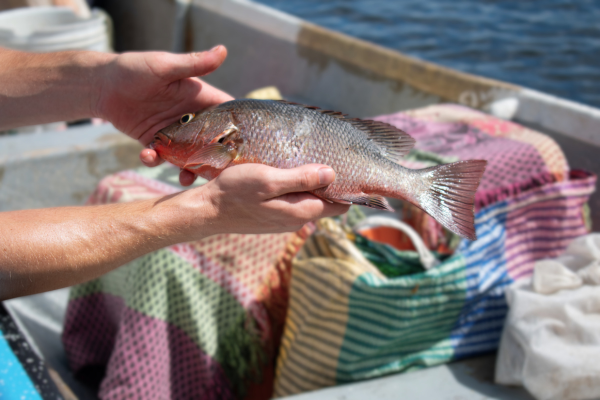
Over the last year we launched the development of the first Fishery Improvement Project (FIP) in El Salvador with Asociación Cincahuite. This aims to build on the successes of their Pesca Limpia sustainable fishing program, by increasing scientific understanding of the fishery and creating new economic opportunities.
In this first phase we partnered with two universities in El Salvador: the Universidad de El Salvador’s marine science department ICMARES and the department of economics at the Universidad Centroamericana José Simeón Cañas (la UCA). Students and faculty from ICMARES have been working on the biological needs assessment needed to complete the first phase of the FIP.
Two student teams from la UCA undertook research in the region: one a socioeconomic analysis of the region around Puerto Parada and the other a study on the connections between food security and climate change. These reports are essential to the early stages of FIP development, providing us with the baseline data we need about an area where data is nonexistent. We look forward to continuing partnerships with la UCA in the future.
We’ve made available one-page summaries and reports in their entirety in both English and Spanish.
Socioeconomic Analysis and Productive Potential in Puerto Parada, El Salvador
Economic, Social and Environmental Impacts of Climate Change on Agricultural Production in Puerto Parada, El Salvador
We extend our sincere thanks and gratitude to the students and their professor Meraris López for their time, commitment and expertise.
Mangrove Ecosystem Restoration
Work continues on reforesting and ecologically restoring areas of degraded mangroves around Puerto Parada. With financial support from JBA and our friends at Trees, Water & People, community members are able to come together and plant mangrove seedlings. This is both an environmental benefit and a community one. We look forward to expanding our work in mangrove conservation in 2026.
Public Space Design and Organizational Capacity Building
The new dormitory and office space at Asociación Cincahuite is complete! A core part of our support for Asociación Mangle and Asociación Cincahute is to provide unrestricted funding that our organizational partners can spend on their own organizational development and priorities. For Asociación Cincahuite, this has meant purchasing the property that their office is on, and expanding the structure to add a dormitory space and separate office for private meetings with community members.
Agroecology
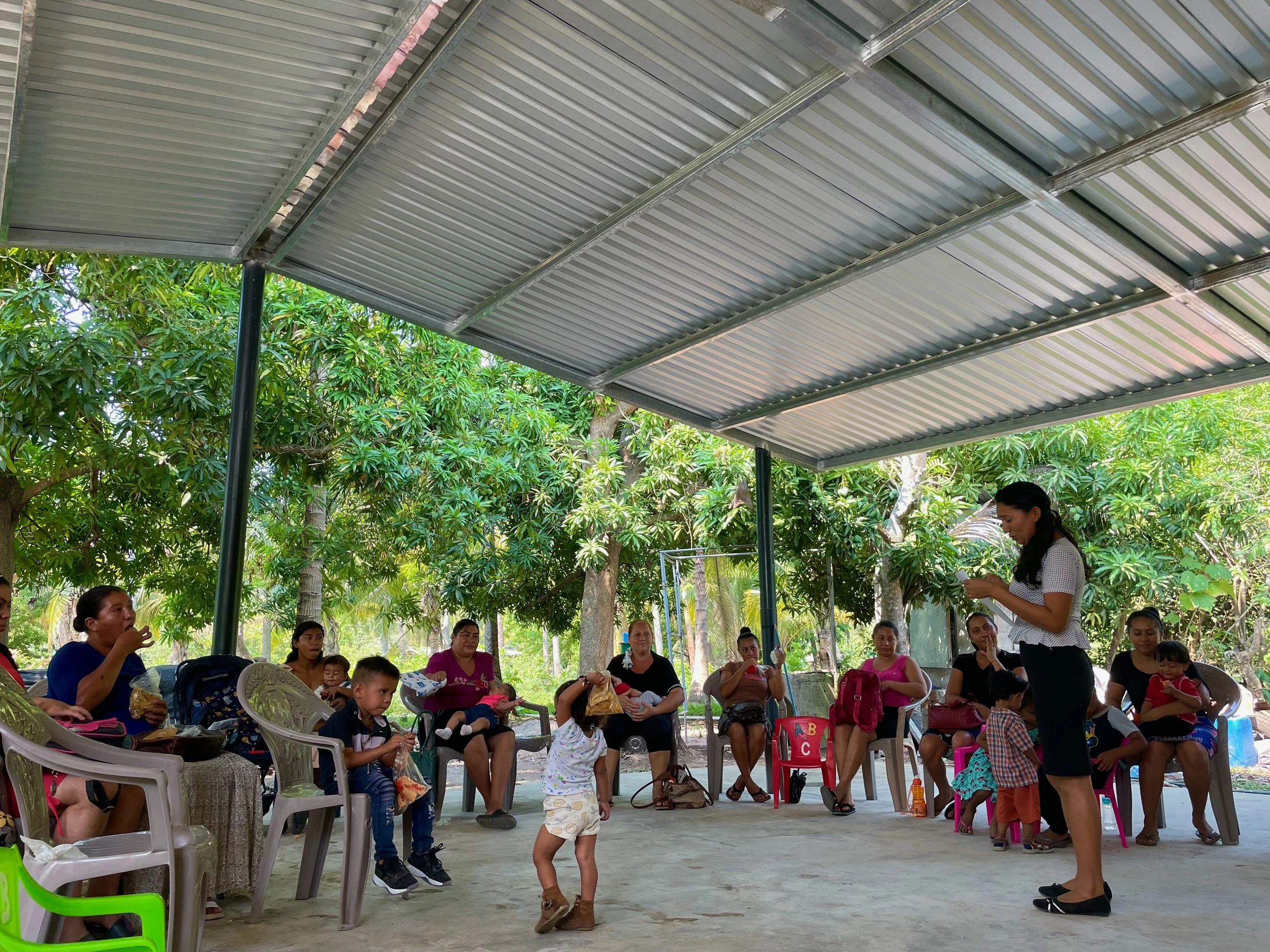
Agroecology projects in the Bajo Lempa in particular have taken a significant funding hit this last year with the suspension of the Interamerican Foundation spending by the US Department of State. But we are undeterred and are working with a private foundation to provide $5,000 to support this work as we actively seek new partnerships!